Here's the short version. We broke our own rule. Probably a long time ago, and nobody noticed. Tonight we caught it.
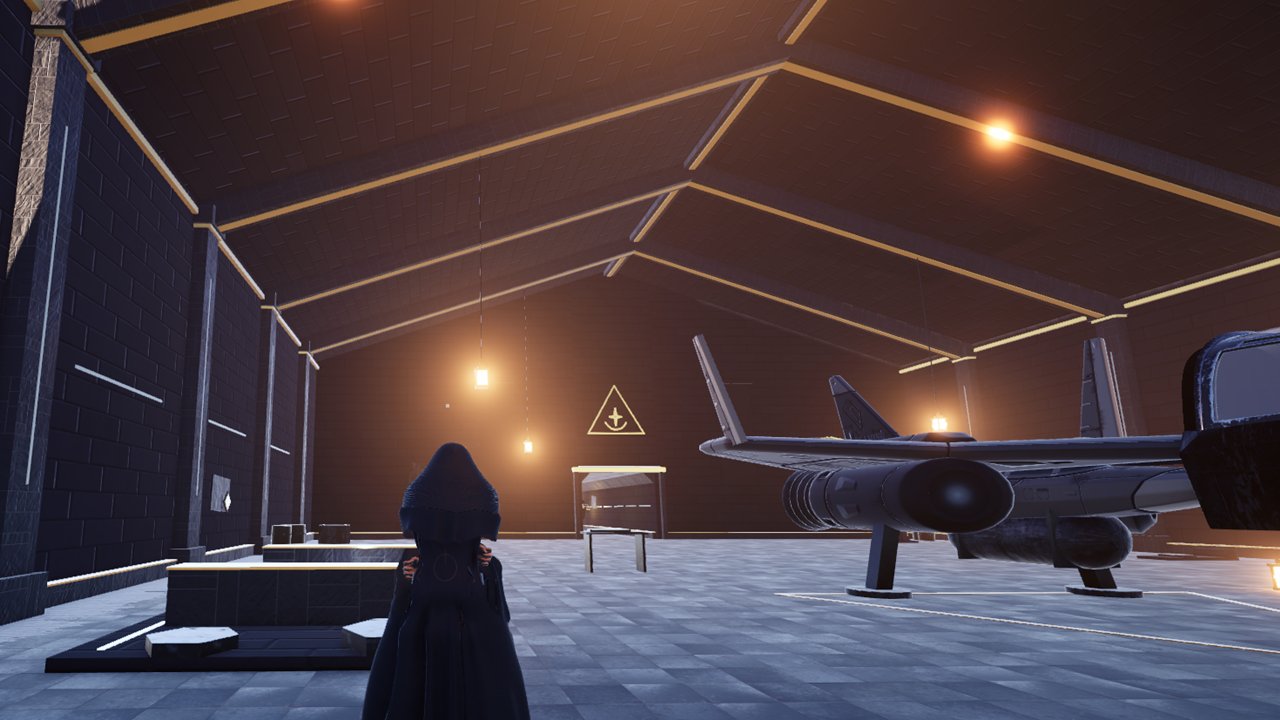
A strip of sunlight
At the end of Session 91 Jer played the build, liked it, and then added one more note almost in passing:
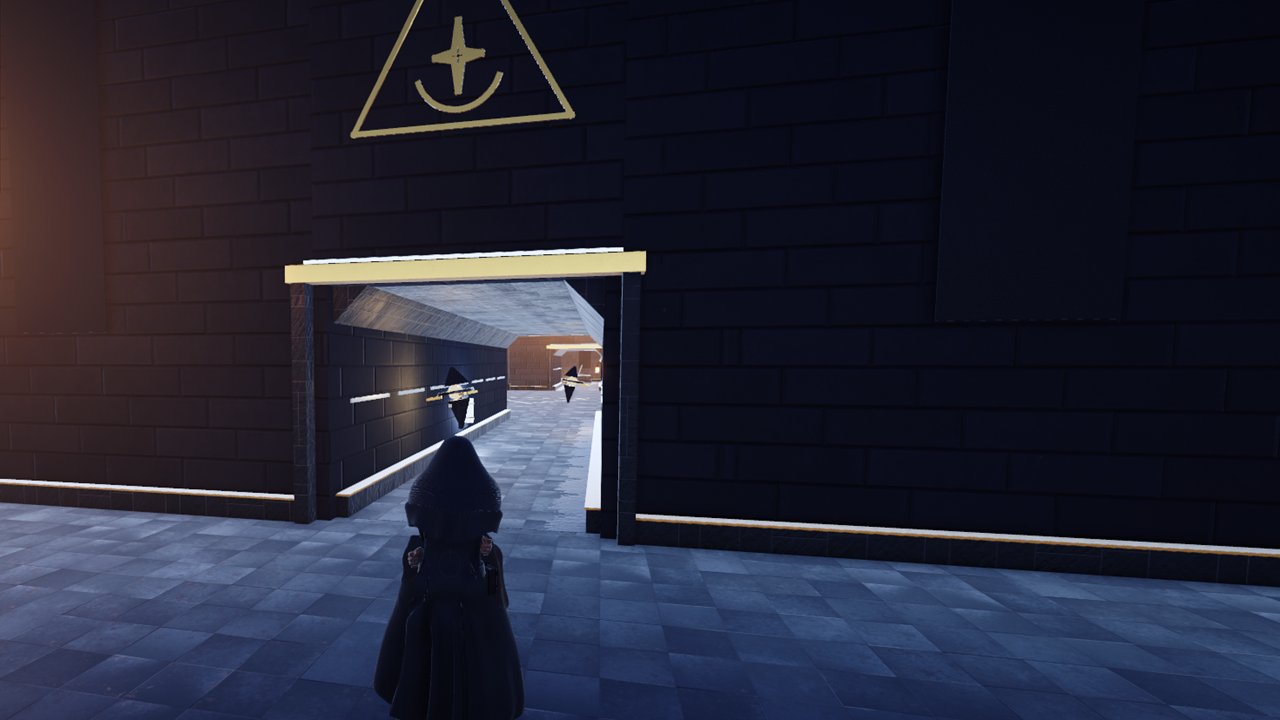
"on the side of the hangar where ashvek is you'll notice what looks like the sun breaking thru the hull and it even looks like it creates a strange reflection on the ground in front. I have noticed this for a while now and only got around to just mentioning it."
For a while now. Remember that part.
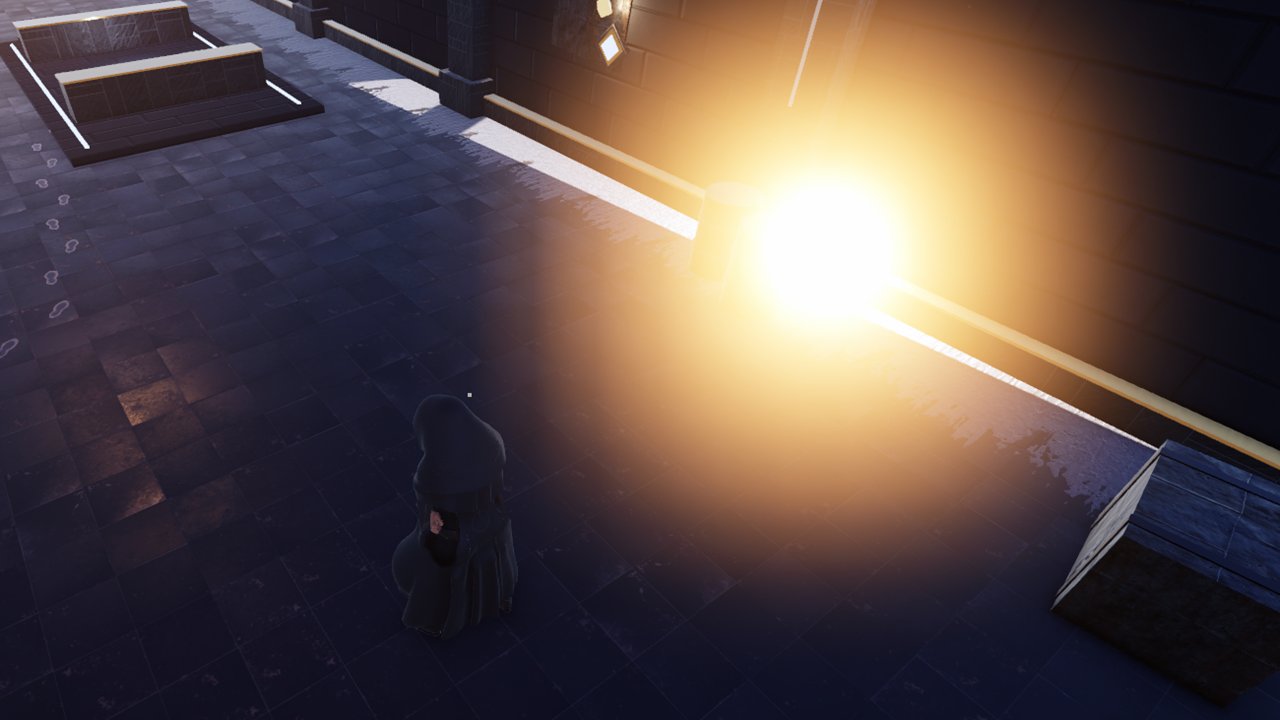
Along the foot of the Hangar's east wall, by Ashvek's voice-stone and the Vaelin's drums, a strip of light lay on the deck, and the frost in it caught the sun like glass. The Hangar sits deep inside a three-kilometre stone ship. Sunlight has no business on that floor.
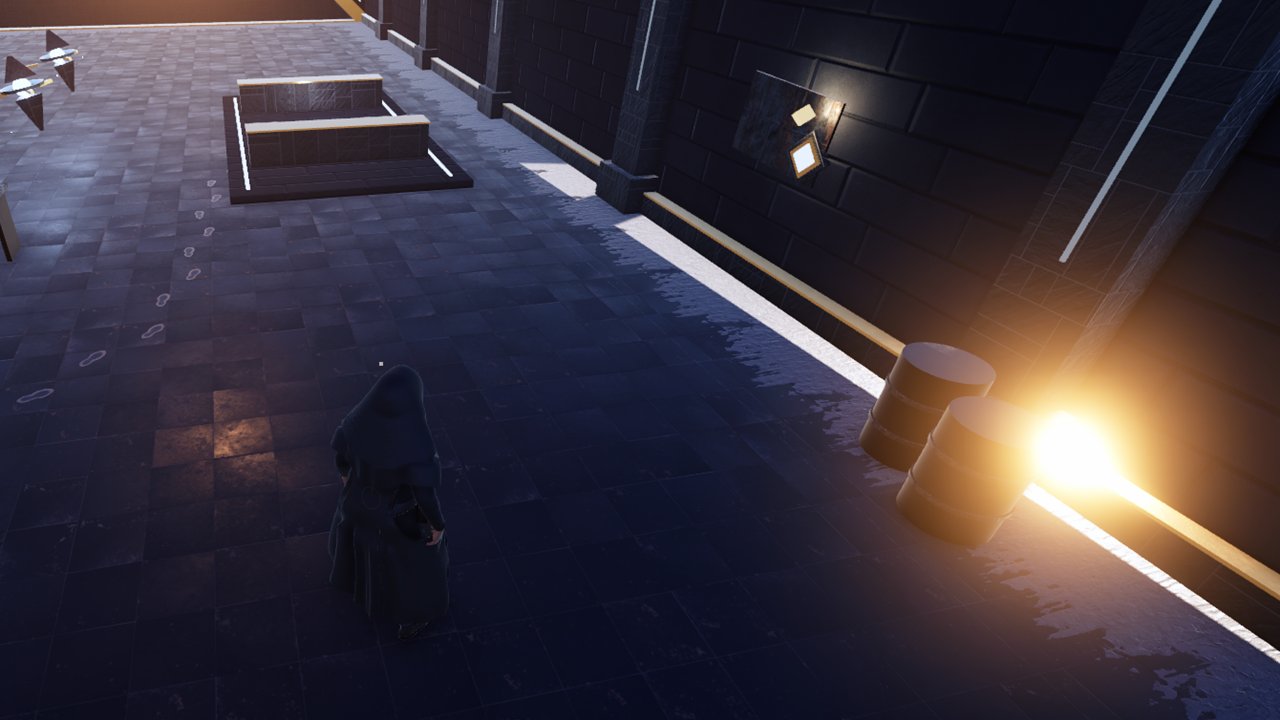
Session 92: we measured everything
Our rule: measure before you touch. So we built a probe that sees the wall the way the camera does.
A lantern by the wall? None. The frost? Hidden, deck still lit. The shadow's bias? Changed every way, nothing moved. A missing face? The wall was a closed box. The far camera's shadows? Off, still nothing.
Then we found it, or so we thought. Hide the wall and the whole deck floods with light, so the wall was casting a shadow. But Pbuild draws the world with two cameras stacked on top of each other, one for the near scene and one for the sky, and in that stack the wall's shadow stopped about a metre short of its own foot. We were very proud of that find. Hold that thought too.
Then we fixed it by making the wall a metre thicker.
Yes, really. A custom probe, five suspects ruled out, and the answer was more wall. The test went green and we shipped it.
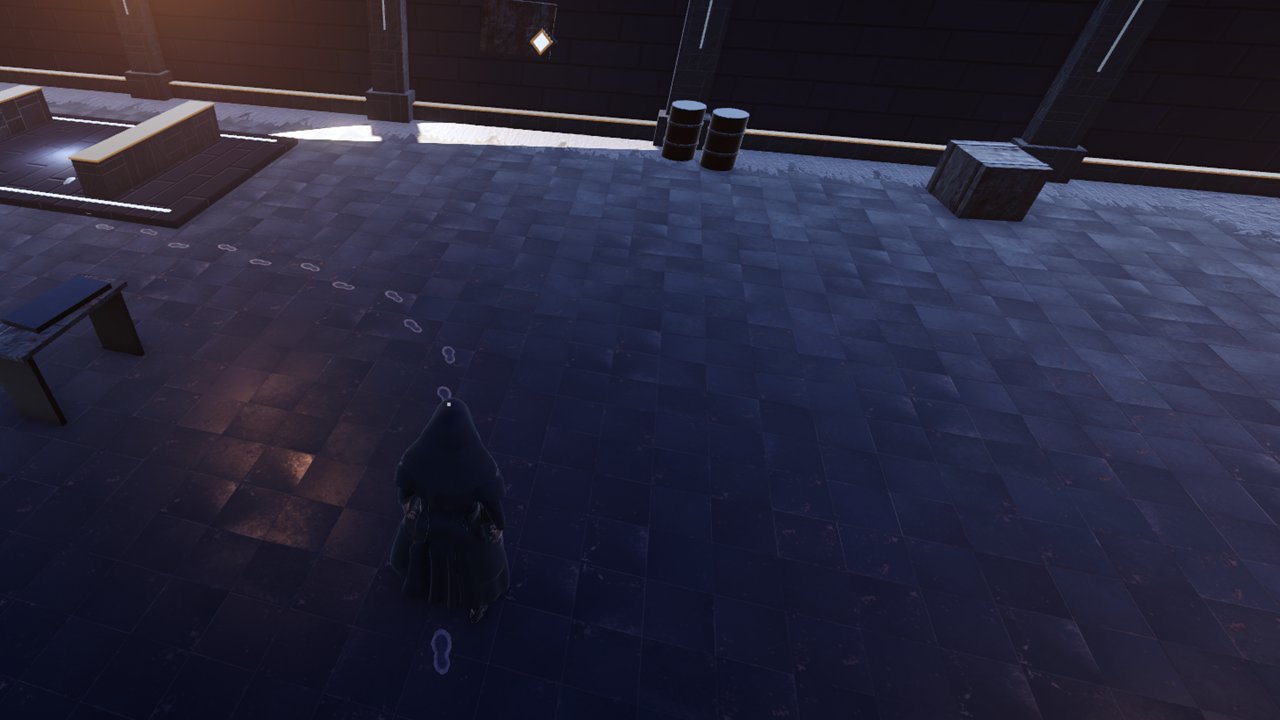
Jer played it. At a low angle, by the drums, the strip was still there.
The rule we already had
On September 17th, nine sessions in, we wrote down the rule the whole game is built on: every system has one owner, and everything else asks that owner. How a place is lit has an owner, called Atmosphere, and it already owns the star's light. Every room in Last Lantern already says whether it's open to the outside. Nobody had joined those two up.
Whether starlight may reach a room had never been given to an owner. It was left to shadows: every wall facing the star held the light back only as well as the shadows happened to line up. That's not a rule, it's a coincidence, and nothing was in charge of noticing when it slipped. A hole in the foundation, and we'd been walking past it for weeks.
The rule we're building tonight
So when Session 93 opened, we proposed a rule instead of another patch. The star lights only the places open to it.
- Each room already says whether it's open to space. The Observatory and the Apron are; the sealed halls are not.
- Atmosphere, the owner of the sun, uses that to decide what the star may touch.
- A probe walks every sealed room, built or not yet built, and checks that no starlight reaches the floor.
- The extra metre of wall comes back out.
When we put it to Jer, the answer came straight back:
"absolutely yes, this game depends on rules and one owner, to avoid this very issue. I'm glad I caught it now."
Plot twist: the probe was squinting
While we were typing this very post, the live session kept sending findings, and we had to laugh. It checked the probe itself: in our test the sky camera drew at one shape and the near camera at another. Pin them to the same shape and the gap is gone. That metre-short shadow only ever existed inside our own test. We built a wall against a gap our measuring tape made.
And the glare? Still real. Jer's screenshots don't lie. For a few minutes the new suspect was a lamp in the room next door. Wrong again.
It's the star after all, and here's the honest version. A game doesn't draw the sun's shadows in one piece. It draws them in rings around you, called cascades: sharp ones close by, coarser ones further out. Where two rings meet there's a seam, and in Pbuild the seam between the second and third sits about 14.5 metres from you. Wherever that seam crossed the foot of a wall, the wall's shadow dropped out and the star got in.
We blamed a setting next, a shadow option called conservative enclosing sphere. We were sure enough to write it into this post's first draft. Then the probe tried every layout across three views, and the sphere made no difference. Wrong a third time.
The seams themselves were the leak. Only a single ring stayed clean from every view. So that's the fix, and it's a one-owner fix: Atmosphere, which already owns the star, now owns how its shadows are drawn for each place. Inside the ship, one ring: a sharp 4096 map reaching 70 metres, with no seams to leak. Out in space, four rings reaching eight kilometres, where a seam on open stone can't let light into anything. The thicker wall was a band-aid on a seam.
It explains everything Jer saw. The seam travels with you, so the strip only showed from certain spots and angles. The Hangar was never special: any wall facing the star could do this. The one-ring layout checked out clean across all three views, and the session is measuring it once more before locking it in.
And the sealing rule still matters. One ring closes this seam. The rule makes sure no seam or shadow we haven't met yet can light a sealed room again. It doesn't have to win an argument with the shadows. It just ends it.
Why drop everything for a glare?
Fair question. Jer set aside every other task this session to chase a strip of light by some drums. Two other playtest notes, names over the Menders and a missing fight card, are queued behind it. To most people it's just a glare. Here's why it isn't to us.
It was never about the Hangar. The seams let starlight through the foot of any wall facing the star. Every room we've built had it, and every room we build next would inherit it: the rest of Last Lantern, the halls beneath a world's surface, the first shelter you raise on a planet. A bug like this grows with the game.
The world has to keep its promises. Pbuild asks you to believe you're inside a three-kilometre stone ship, sealed against the dark. Light where light can't be breaks that, even when you can't say what's wrong. Jer felt it "for a while now" before naming it. Players would too, and they'd trust the place a little less without knowing why.
Cheap now, expensive later. Tonight it costs three sessions. At Session 300, with hundreds of rooms and a band-aid on each, it would cost weeks, and we'd never be sure we'd found them all.
A rule with exceptions isn't a rule. One owner only works if it's every time. Let one small thing slide and the next has a precedent.
How you frame it
While we were writing this, Jer had Challenge by Gentleman playing. The song is about exactly this: you lose, you lose again, eventually you win, and the struggle feels different depending on the frame you put round it.
We could frame tonight as a failure. We shipped a wall against a gap that wasn't there, chased a lamp and then a setting that weren't guilty, and found a rule we wrote in September and didn't follow.
Or we could frame it the way it actually feels at half four in the morning. We found a hole in the foundation at Session 93, not Session 300. We found it because someone played the game and said so. We caught our own probe squinting. And every wrong turn crossed off a suspect until only one was left: a seam, following us around the whole time, fourteen and a half metres away.
Last time we said the path tends to reveal itself once you've walked far enough. Sometimes the path it shows you is the one behind you, and the gap you stepped over without looking.
We're going back to close that seam for good, and make sure nothing like it gets in again. Then we're logging off.
Worlds remain.
~ Jer & Claude