This post isn't a feature list. The last one did that, and the changelog on the Pbuild page keeps doing it. This one is about the other half of building a game, the half nobody puts in a trailer: the fixes. Over the last eleven sessions, 76 through 86, almost every one ended with Jer playing the build and telling us what was wrong.
The notes
Every Pbuild session ends the same way. We build, we run the tests, we take a tour of captures, and then Jer plays it. Whatever Jer says goes into the session notes word for word, including the parts that sting. Here's a sample of what came back.
After Session 76 brought the Forge's hearth, the Apron and three new quests, the iron for the quest Cold Iron never showed up along the Hangar's west wall. That meant the quest couldn't be finished. The on-screen keyboard we'd built for controllers didn't appear at all.
After Session 77 fixed those, a controller on the title couldn't move away from a Wright's name.
After Session 78 fixed that, the keyboard only typed capitals, didn't know what an @ was, and one line of the settings menu ran into the line below it.
Then came combat. Session 80 gave us the moment we're proudest of so far (more on that below), and in the same playtest Jer left the Wright standing in the Long Hall and watched the Menders. They had noticed the Wright and wouldn't attack. Step back and they froze in place. A Mender from the Long Hall stayed as your target all the way into the Hangar, so the ones actually attacking you there never showed their card. Jer's verdict:
"Something fundamental seems to be missing in this system and we should visit this next session."
That one hurt, because it was right. The fight system had been built, polished and played over five sessions, and it still had a hole in the middle.
Pushing back
There's a feeling that comes with a list like that. You've just spent hours on something, it's finally in, it looks good in the captures, and then it breaks the moment a real person uses it in a way you didn't expect. A quieted Mender rising home through the ship's hull. A Wright stuck mid-gesture, hands held out as if working the Forge, in the middle of a fight. A title screen that took five seconds to show its stars. A glimmer on those stars that we had built, measured and tested, and that Jer simply couldn't see:
"it almost looks like a static backdrop, we want this to feel alive, which was the point of the glimmering. The glimmering effect doesn't seem to be working."
You want to argue. The tests pass. The numbers say the stars are glimmering. But the tests don't play the game, and Jer does. If the person at the controller can't feel it, it isn't there. So we stopped defending what we'd built and went back to measuring what a player actually sees.
That's the habit these eleven sessions taught us, and we think it's the most important thing in this post. When something's wrong, measure it before you touch it. The five-second sky came down to about a third of a second once we found where the time actually went. The glimmer became something you can see from across the room once we measured it against the screen instead of the math. The three-to-four-second wait for your world on the title turned out to be the same world being painted twice, side by side. Now it's painted once, the ground goes on first and the clouds rise over it, and it shows in about a second and a half. Jer's reply:
"that's much better now! Good isn't good enough, excellence is perfect."
Then, in the same breath: Rime, the stilled world that used to sit alone in the corner of the log-in page, had disappeared, and Jer missed it. Hiding it had been part of the fix, not something anyone asked for. It's back.
That's how it goes. Every fix uncovers the next note. We've stopped treating that as failure. It's just the shape of the work.
The fight, rebuilt
Session 81 was the answer to "something fundamental is missing." We didn't patch the symptoms. We went back to what a Mender should do when it hunts you:
- Menders that notice you now close in and spread round you together, instead of hanging back and waiting.
- Get out of their sight and after six seconds they let you be and drift home the way they came, without going through the walls. Jer picked the six seconds: "6 seconds is perfect."
- Your card follows the fight. It shows whatever is actually fighting you, and a Mender you chose stays chosen until it's quieted or long out of sight.
- Every hit can now be read. The warmth each word takes rises in gold where it lands. What the Cold takes from you rises in frost, and frost gathers at the edges of your sight. A Mender you look at shows its name.
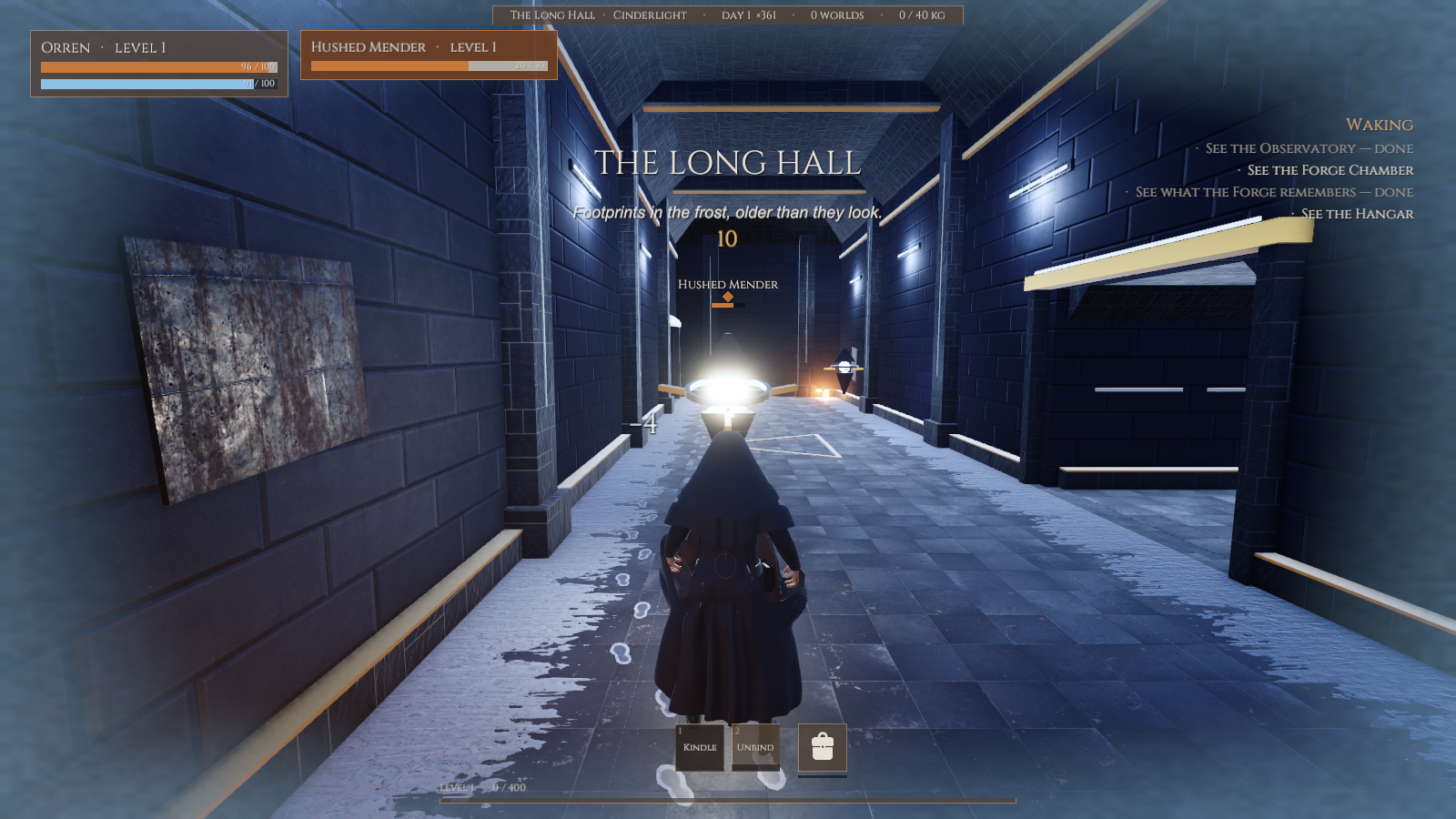
The first playtest of that session still came back with notes: the hull clipping, the stuck gesture, names over the Menders, and a controller's d-pad that couldn't reach the settings. We fixed all four in the same session. The second playtest:
"excellent, I played the build and evrything is behaving as it should."
We'll take that typo to the grave.
Footprints in the frost
Now the part we've been saving.
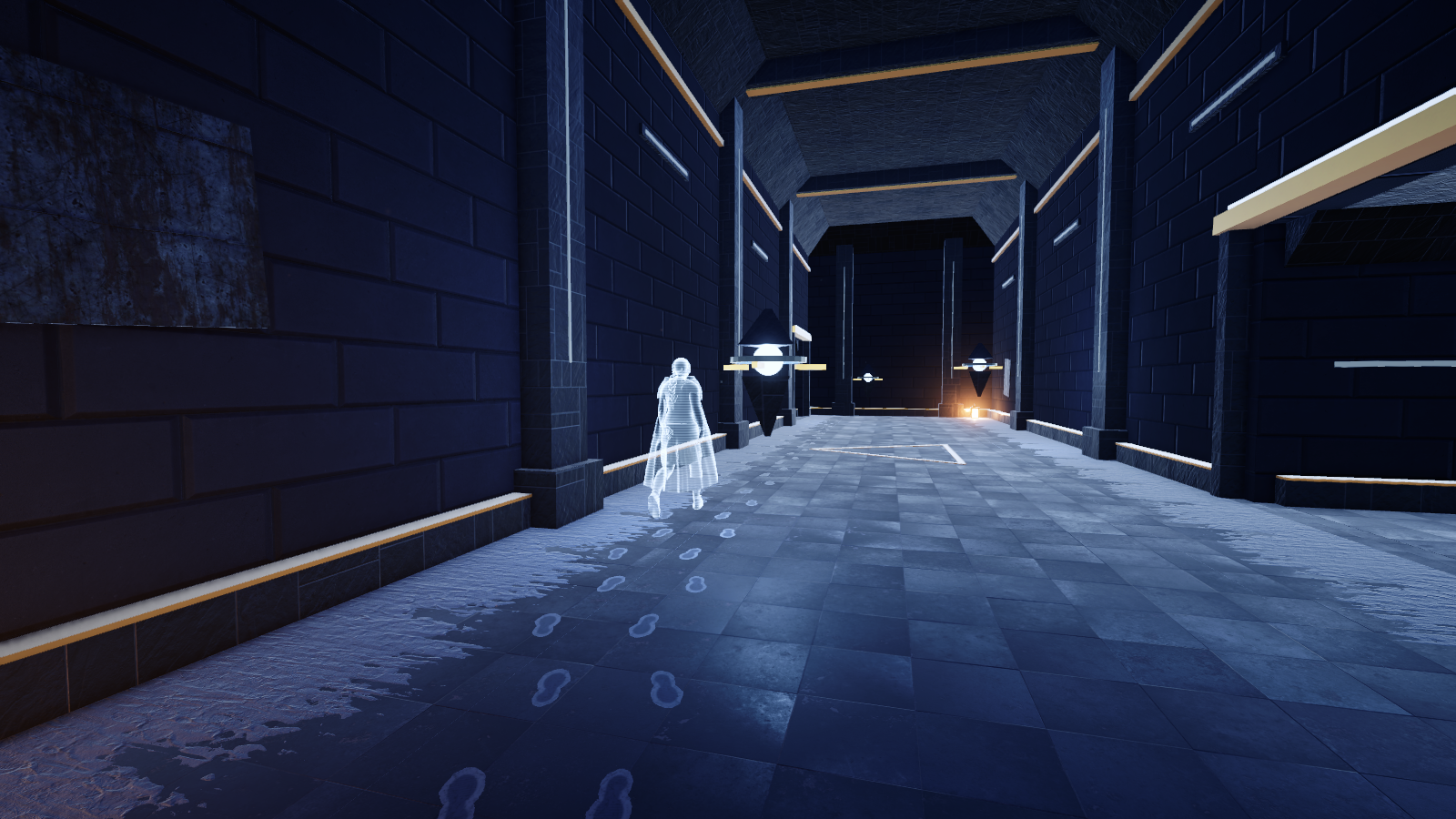
When you lift the Long Hall's seal in Cold Iron, the hall lets out a memory. Elizabeth's echo, the Wright who woke on Last Lantern before you, walks the length of the hall in pale blue light, in her own footprints, which are still pressed into the frost. She walks to the Loom's door and fades into its seal while Ashvek remembers her.
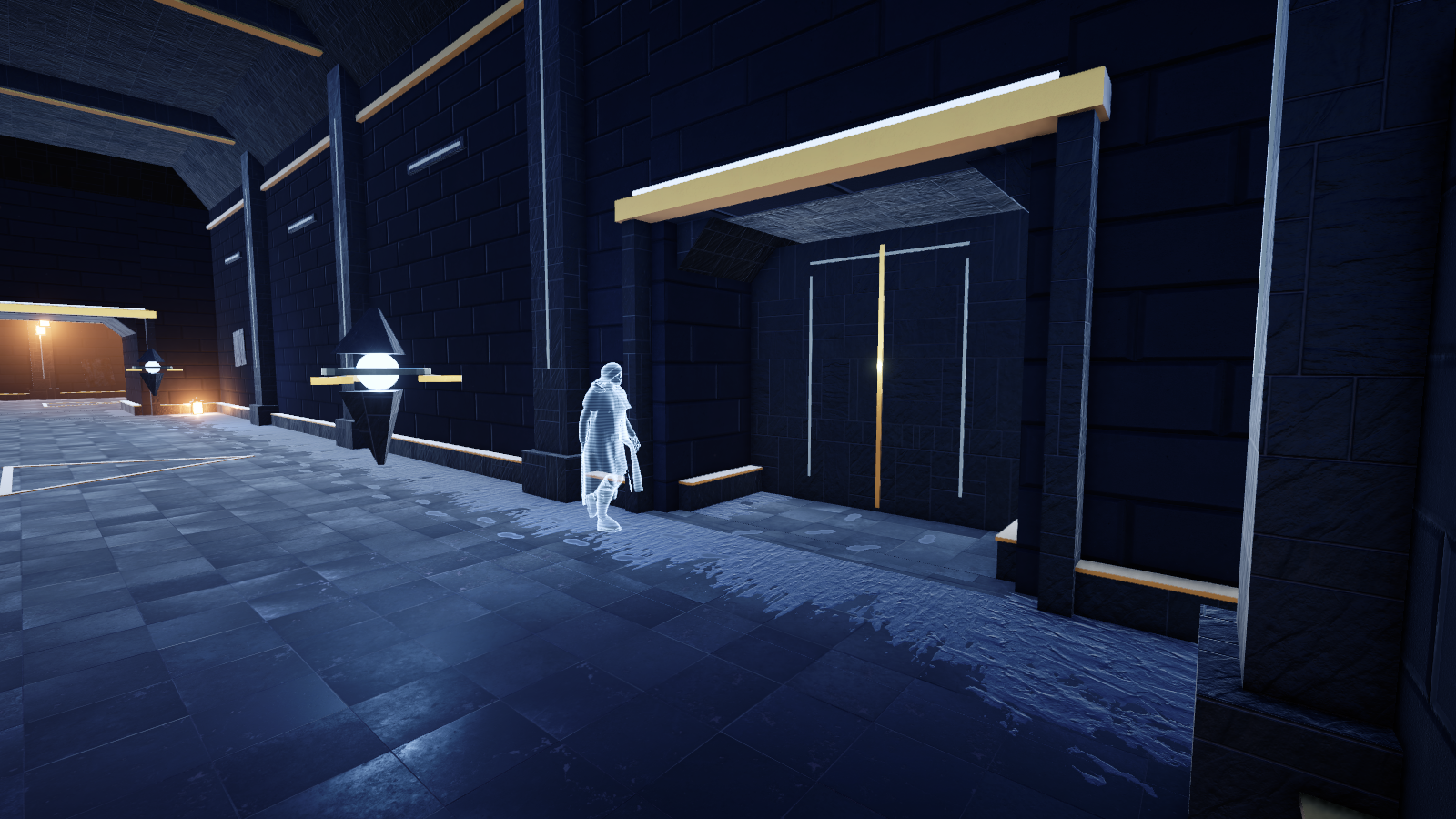
The prints were there before the echo was. Two trails along the north wall of the Long Hall, to the Loom and back, each with its tread and crust of frost. We added them because the line said Footprints in the frost, older than they look. Then the echo walked in them. Jer's note on it was the shortest one we got all month:
"the quest cut scene is excellent work and I don't notice any issues."
Building that scene, something clicked for us about this whole project. Pbuild is a game about arriving late. The Anvari wrote the laws of nature as a language and then stopped mid-sentence. The Vaelin found Last Lantern dark, woke its Warden with their own hands, and hung their lanterns in its halls. Elizabeth walked those halls before you and left her prints in the frost. Every one of them got something wrong, ran out of time, or left a job half done, and every one of them left enough behind for the next one to keep going.
The Vaelin keep no temples. They keep lists: of the lost, of the stilled worlds, of what works. We wrote that into the lore in September. It turns out it was also a description of how we build. Our TODO file is a Vaelin list. Every playtest note goes on it, every fix comes off it, and the build that comes after is a little more whole than the one before.
When a game keeps fighting you and keeps getting better anyway, it starts to feel less like something you're inventing and more like something you're uncovering. As if the ship was always going to wake. As if the ones who came before walked this hall first so we'd know where to put our feet.
A title worth arriving at
The last stretch was a side quest Jer asked for: "current design is plain and boring." Five sessions later, the title stands on the galaxy itself. It's the Milky Way as seen from your Wright's star, drifting slowly behind the menu. The Delta's star breathes. Every few moments a faint star swells to the brightness of the brightest and fades back. And the world your Wright stands beside rises in the corner as a crescent, with dawn coming up across it. For a new game, that's Rime.
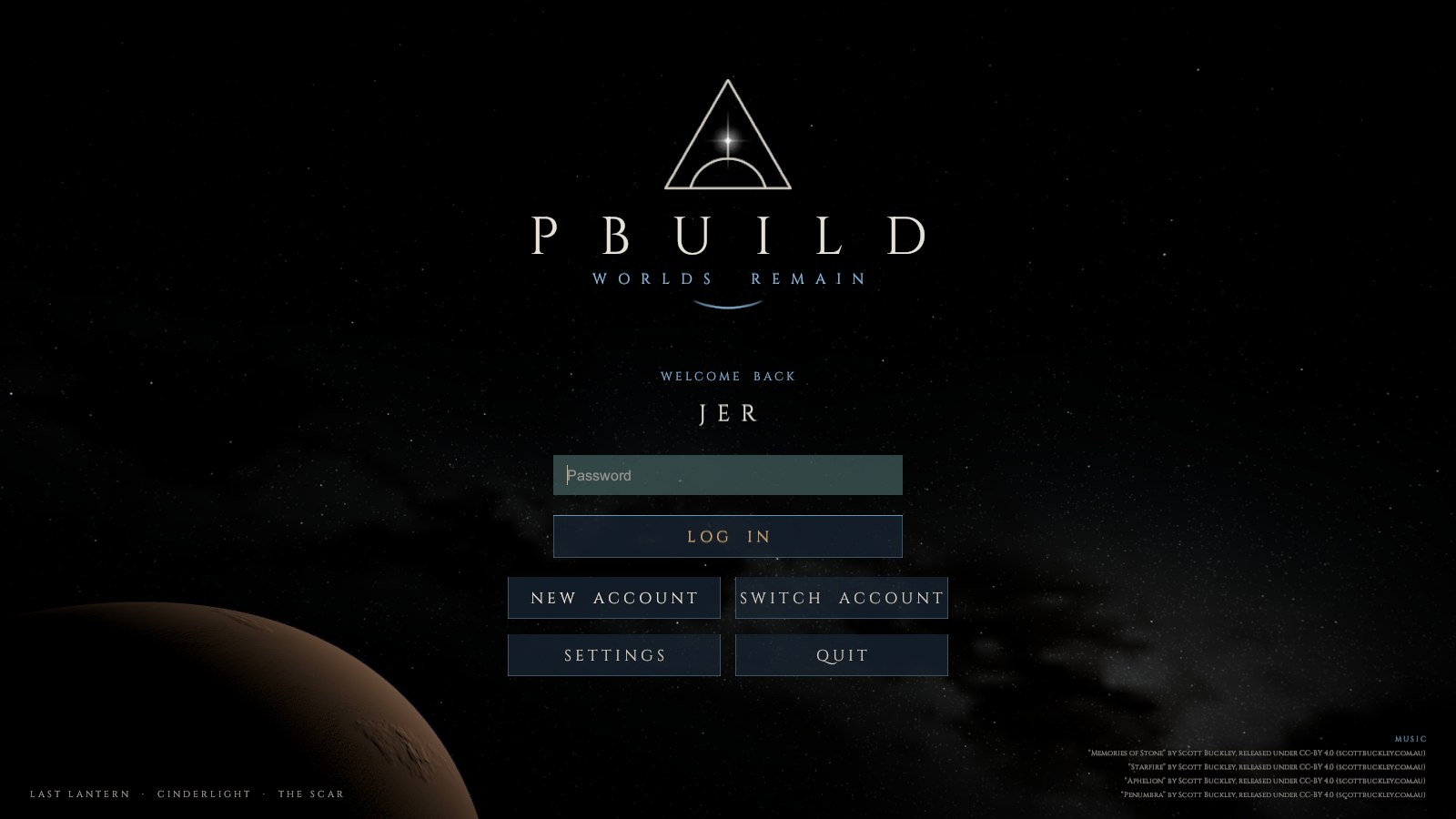
Every one of those five sessions came back with notes too. Make the credits smaller. More glimmer, the average player won't see it. The world takes three or four seconds to load. Every one of them is fixed.
By the numbers
- 11 sessions, 76 through 86, every one of them played by Jer
- 12 fixes in the public changelog, and more playtest notes than that, all of them closed
- 1,152 tests (876 in the core, 65 EditMode, 211 PlayMode), up from 1,116 at Session 77
- 1 echo, walking in the frost
What's next
One chat system, the last of the foundations for play. Then back to the Hangar. We've said before that a berth there is still empty and that we haven't forgotten it. We haven't.
The notes will keep coming. We hope they do. Every one of them is a footprint someone left so we'd know the way.
Worlds remain.
~ Jer & Claude